
What Are Industrial Curtain Walls? A Complete Guide for Facility Managers
As a facility manager, you are constantly balancing competing priorities.
You need to improve workflow, protect employees, control costs, and adapt your space as operational needs change. Traditional construction can solve some of these challenges, but permanent walls often come with significant expenses, long installation timelines, and limited flexibility.
That’s why many warehouses, manufacturing facilities, fabrication shops, and distribution centers are turning to industrial curtain walls as a practical alternative. These flexible partition systems help create separate work areas, improve environmental control, and support changing operational requirements without the cost and disruption of conventional construction.
In this guide, we’ll explain what these curtain walls are, how they work, their key benefits, and how you can use them to improve efficiency and flexibility throughout your facility.
What Is an Industrial Curtain Wall?
An industrial curtain wall is a flexible, durable partition system designed to divide large industrial spaces into separate work zones.
Unlike traditional walls, these systems use heavy-duty vinyl, reinforced fabrics, or clear viewing panels suspended from an overhead track or support structure.
Industrial facilities use curtain walls to create temporary or semi-permanent barriers between production areas, storage zones, loading docks, clean workspaces, maintenance areas, and employee workstations.
Many industrial curtain wall solutions can be opened, moved, expanded, or reconfigured as operational needs evolve. This flexibility makes them an attractive option if you need an adaptable layout for your facility.
Unlike permanent construction, curtain walls typically require minimal installation time and can often be deployed without major structural modifications.
How Industrial Curtain Walls Work
Most curtain wall systems consist of the following key components.
Heavy-Duty Curtain Panels
The curtain material serves as the primary barrier. Depending on the application, panels may be:
- Opaque vinyl for privacy and containment
- Clear PVC for visibility and supervision
- Insulated materials for temperature control
- Welding-grade materials for spark and flash protection
- Specialized fabrics for dust and particulate containment
Suspension Systems
Curtain panels are typically mounted using:
- Ceiling-mounted tracks
- Structural steel supports
- Rolling track systems
- Fixed mounting hardware
These systems allow curtains to remain stationary or move as needed.
Access Points
Many curtain installations include:
- Personnel doors
- Strip doors
- Sliding access openings
- Equipment pass-throughs
- Roll-up sections
This allows your workers and equipment to move efficiently between areas while maintaining separation.
Common Applications for Industrial Curtain Walls
One of the biggest advantages of these flexible curtain wall systems is their versatility. They can be used across virtually every type of industrial environment.
Warehouse Space Division
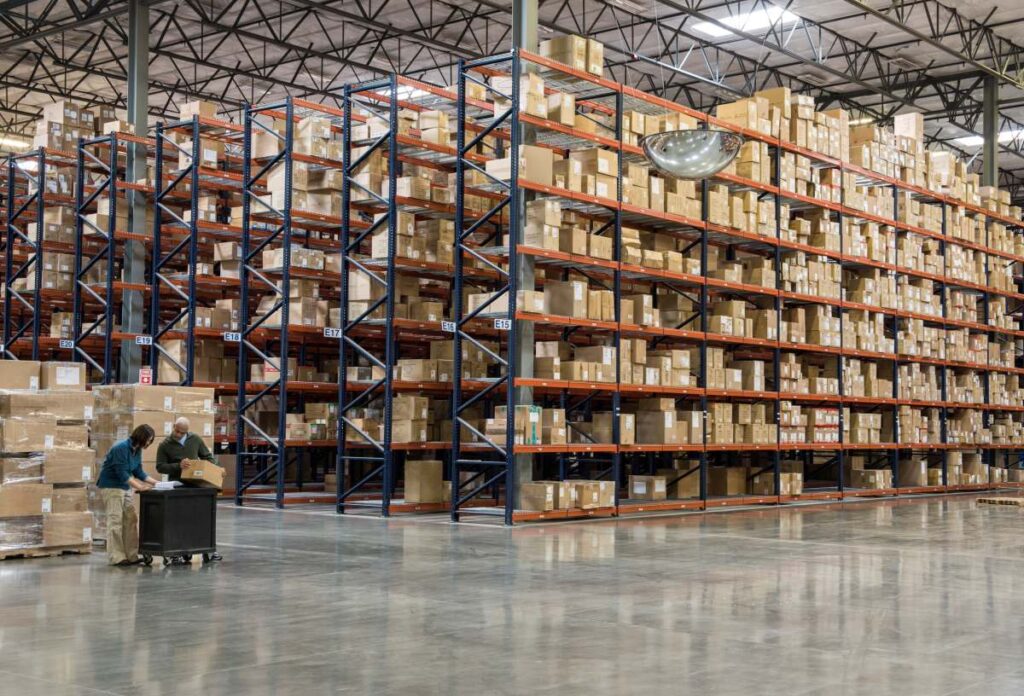
Large warehouses often struggle with open floor plans that make organization difficult. A warehouse curtain wall can create designated areas for:
- Inventory storage
- Order fulfillment
- Packaging operations
- Equipment maintenance
- Employee workspaces
- Quality control stations
These divisions can help to improve your organization without requiring expensive renovations.
Manufacturing Work Cells
Manufacturing facilities frequently use curtain systems to separate:
- Production lines
- Assembly stations
- Fabrication areas
- Inspection zones
- Testing environments
This improves workflow management while helping reduce cross-contamination between operations.
Dust and Debris Containment
Many industrial processes generate airborne dust, debris, and particulates.
Curtain walls help contain:
- Grinding dust
- Woodworking debris
- Metal particles
- Packaging waste
- General production contaminants
By creating dedicated containment zones with curtain walls, you can reduce the spread of dust and debris, improve workplace cleanliness, and simplify facility maintenance.
Welding and Fabrication Areas
Specialized welding curtains protect nearby workers from:
- Welding flash
- Sparks
- Heat exposure
- Grinding operations
These barriers create safer work zones while maintaining visibility and accessibility.
Temperature-Controlled Areas
You may need to separate conditioned spaces from larger production environments.
Curtain systems can help maintain:
- Heated work zones
- Air-conditioned production areas
- Cold storage sections
- Seasonal workspaces
This improves your employees’ comfort while reducing your HVAC operating costs.
Benefits of Industrial Curtain Walls
Facility managers often choose industrial curtain walls because they solve multiple operational challenges simultaneously.
Lower Cost Than Permanent Construction
Traditional wall construction can be expensive. Costs often include:
- Engineering
- Permitting
- Framing
- Drywall
- Electrical work
- Painting
- Ongoing modifications
Curtain systems typically require a fraction of the investment while providing many of the same space-division benefits.
If you’re seeking practical space separation without major capital expenditures, curtain walls often deliver excellent value.
Faster Installation
Permanent construction projects can disrupt your operations for weeks or months.
Most curtain wall systems can be installed significantly faster, often allowing your facility to continue operating during installation. This reduces downtime and minimizes interruptions to your production schedules.
Flexibility and Scalability
Your operational requirements probably won’t stay the same forever.
A major advantage of curtain wall systems is the ability to:
- Expand work areas
- Reconfigure layouts
- Relocate partitions
- Add additional sections
- Modify access points
This flexibility supports your changing production demands without requiring costly facility renovations.
Improved Environmental Control
Open industrial spaces can be difficult to manage.
Curtain walls help facilities control:
- Airflow
- Dust migration
- Temperature differences
- Noise levels
- Light exposure
The result is a more controlled and efficient work environment.
Enhanced Safety
Strategic partitioning can improve workplace safety by separating:
- Pedestrian traffic
- Equipment operations
- Hazardous processes
- Welding activities
- Maintenance work
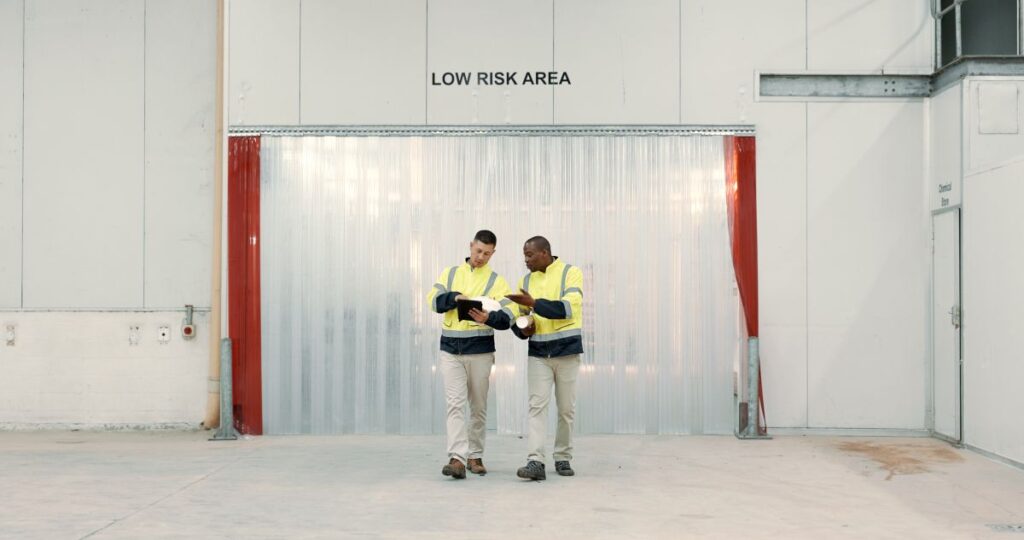
Clearly defined work zones reduce confusion, support accident prevention in the workplace, and help your employees move safely throughout your facility.
Industrial Curtain Walls vs. Permanent Walls
You may wonder whether curtain systems can truly replace conventional construction. The answer depends on the application.
When Curtain Walls Make Sense
Industrial partitions are often ideal when your facility needs:
- Flexible layouts
- Rapid deployment
- Cost-effective space division
- Temporary or evolving work areas
- Environmental separation
- Equipment accessibility
When Permanent Walls May Be Necessary
Traditional construction may still be appropriate when your facility requires:
- Structural support
- Long-term architectural modifications
- Maximum soundproofing
- Fire-rated building assemblies
- Permanent office environments
In many cases, however, curtain walls provide sufficient separation without the drawbacks of permanent construction.
Industrial Curtain Walls and Facility Layout Optimization
You are continually looking for opportunities to improve productivity and workflow.
Effective facility layout optimization focuses on reducing wasted movement, improving material flow, and creating organized work zones. Curtain systems support these goals by allowing you to quickly redesign your workspaces without construction delays.
For example, a facility may use curtain walls to:
- Separate receiving and shipping functions
- Create dedicated assembly cells
- Establish quality inspection areas
- Isolate packaging operations
- Improve traffic flow patterns
Because layouts can be modified as operations evolve, curtain systems become valuable tools for your continuous improvement initiatives.
Organizations implementing lean manufacturing principles frequently use flexible partitions to support workflow changes and process improvements.
Industrial Curtain Walls vs. Modular Walls
Some facilities compare curtain systems with traditional modular walls when evaluating space-division solutions.
Both options offer advantages, but they serve different purposes.
Modular Walls
Modular walls typically provide:
- More rigid structures
- Enhanced aesthetics
- Greater sound reduction
- Office-style environments
- Permanent room creation
Industrial Curtain Walls
Curtain systems typically provide:
- Lower costs
- Faster installation
- Greater flexibility
- Easier reconfiguration
- Better accessibility for equipment
Many facilities use both solutions together. Offices may utilize modular wall systems while production areas rely on curtain walls for adaptable space management.
Supporting Industrial Partitions Across Multiple Applications
Modern facilities rarely rely on a single partitioning strategy.
Many organizations combine various forms of industrial partitions to address specific operational requirements.
Examples include:
- Curtain walls for production zones
- Welding curtains for fabrication areas
- Strip curtains for traffic openings
- Safety barriers around equipment
- Environmental enclosures for dust control
A layered approach allows facilities to maximize flexibility while addressing unique safety and operational concerns.
Choosing the Right Industrial Curtain Wall System
Not all curtain systems are the same.
When evaluating options, you should consider several factors.
Environmental Conditions
Assess:
- Temperature requirements
- Dust levels
- Moisture exposure
- Chemical exposure
- Airflow management needs
Different materials perform better under specific conditions.
Visibility Requirements
Some applications benefit from clear viewing panels that allow you to monitor activities without entering enclosed areas. Others require full privacy or visual separation.
Mobility Needs
Determine whether the partition should be:
- Fixed
- Sliding
- Retractable
- Expandable
- Portable
Mobility requirements often influence track design and hardware selection.
Safety Requirements
You should evaluate whether specialized materials are needed for:
- Welding protection
- Spark containment
- Heat resistance
- Dust control
- Employee visibility
Selecting the right materials ensures both performance and durability.
Expand Beyond Curtain Walls With Additional Redcon Solutions
For many facilities, curtain walls are just one component of a broader facility improvement strategy.
Redcon Industrial Solutions offers complementary products that help you create safer, more efficient industrial environments, including:
- Super-Vision Industrial Curtain Walls & Partition Systems for environmental control
- Weld-Vision Series Welding Curtains and screens for fabrication safety
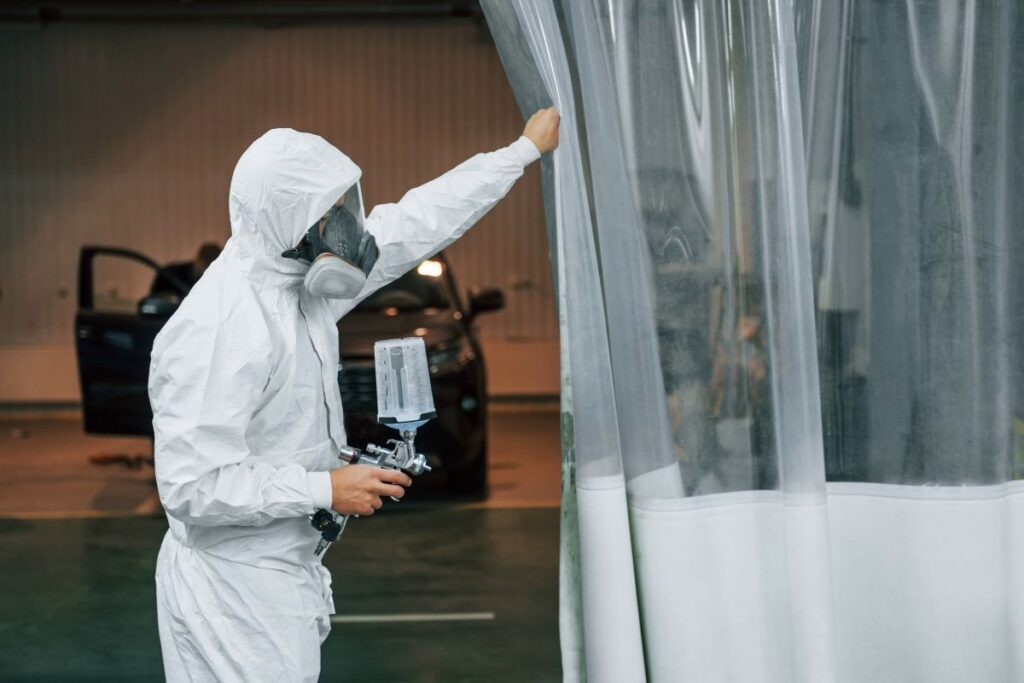
- Automotive Industrial Curtain Walls for flexible, enclosed workstations that keep processes contained
- Privacy Series Industrial Curtain Walls to create fully enclosed, flexible partition systems that provide separation, protection, and control
- Outdoor Curtains to ensure your workspace is protected from the elements, including rain, snow, wind, and dust
- Environmental Series curtains to help provide indoor climate control and a barrier against contaminants
Combining these products with a well-designed warehouse curtain wall system can help you improve organization, safety, and operational efficiency throughout the building.
Transform Your Facility With Redcon Industrial Solutions
Whether you’re looking to control dust, improve temperature management, create dedicated work zones, or support ongoing facility layout optimization, curtain wall systems offer a flexible and cost-effective solution.
At Redcon Industrial Solutions, we help you identify the right partitioning systems for your unique operational needs. From custom industrial curtain wall installations to welding curtains, strip curtains, and other industrial containment solutions, our team can help you create a safer, more organized, and more efficient workspace.
Ready to improve your facility layout? Contact Redcon Industrial Solutions today to discuss the best curtain wall systems and partition solutions for your operation.