
How To Choose the Right Industrial Curtain System for Your Warehouse
Managing a warehouse means you are constantly working to balance efficiency, safety, and flexibility. Your space needs to perform under pressure, adapt to changing workflows, and support your team without slowing them down. That is not always easy when you rely on fixed infrastructure that cannot move with your operation.
This is where industrial curtains come in. These flexible systems give you the ability to divide space, control environmental conditions, and improve workflow without committing to permanent construction. Well-designed curtain wall systems can completely change how your facility functions day to day.
These systems are customizable and are used to separate work zones, reduce disruption between processes, and help you maintain better control over your environment. You might use them to manage warehouse heating and cooling, reduce dust movement, or simply organize a large open floor plan into more manageable sections.
We’ll walk you through how to choose the right system, what options are available, and how to match the right solution to your facility’s needs.
What Is an Industrial Curtain System?
An industrial curtain system is a flexible partition solution designed to divide large industrial spaces into controlled work zones. Unlike permanent walls, a curtain system uses durable materials like reinforced vinyl or clear PVC suspended from overhead track systems.
These systems are commonly used to create separation between production areas, storage zones, shipping docks, maintenance spaces, and quality control stations.
One of the biggest advantages of industrial curtains is adaptability. You are not locked into a single layout. Instead, you can expand, move, or reconfigure your system as your workflow changes.
In many facilities, warehouse curtains are used for general space division, while more specialized environments rely on curtain wall systems for larger structural separation.
At their core, these systems help you turn one open space into multiple functional zones without major construction delays or disruption.
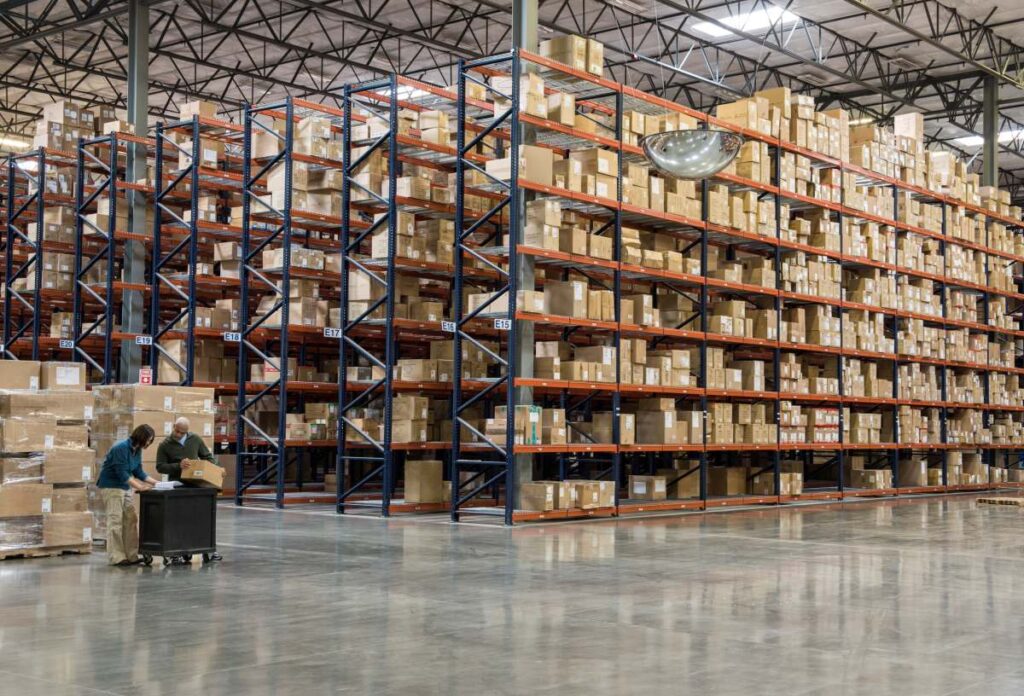
How Industrial Curtain Systems Work
Most curtain systems rely on a simple structure: durable panels combined with an overhead support or track system. While the concept is simple, the performance depends on how each component is designed.
Heavy-Duty Curtain Panels
The curtain material is what determines performance. Different applications require different materials, including:
- Opaque vinyl for privacy and containment
- Clear PVC for visibility and supervision
- Reinforced fabrics for durability
- Insulated materials for thermal control
- Specialized barriers for airborne containment
For example, temperature control curtains help regulate air exchange between zones, while dust containment curtains help limit particle movement in high-activity environments.
These material choices directly impact how well your curtains perform in real-world conditions.
Suspension and Track Systems
The support system allows your curtain layout to function smoothly. Common configurations include ceiling-mounted tracks, steel support framing, and sliding rail systems.
These systems determine whether your curtains stay fixed or move based on operational needs. In fast-paced environments, mobility can make a major difference in workflow efficiency.
Access and Entry Points
To keep operations moving, warehouse curtains often include built-in access points such as:
- Roll-up doors
- Strip curtain entries
- Sliding panels
- Equipment pass-through openings
This ensures you maintain separation without restricting movement across your facility.
Common Applications for Industrial Curtains
One of the reasons curtains are widely used is their versatility. They can be adapted to nearly any warehouse or industrial environment.
Warehouse Space Division
Large open facilities often rely on warehouse curtains to create structure where none exists. These divisions help define:
- Shipping and receiving zones
- Storage areas
- Packaging stations
- Maintenance sections
- Quality control spaces
By using a highly adaptable curtain system, you can organize your workflow without expensive renovations.
Temperature-Controlled Work Areas
In environments where climate consistency matters, temperature control curtains help reduce air exchange between zones. This allows you to improve energy efficiency across different parts of your facility.
Dust and Particle Management
Operations that generate debris benefit from dust containment curtains, which help limit the spread of airborne materials between work zones. This supports cleaner conditions and easier maintenance.
Large-Scale Facility Separation
For wider facilities, curtain wall systems provide broad coverage while maintaining visibility and airflow. These systems are especially useful when you need structure without closing off your space completely.
Custom Layout Requirements
When standard sizing does not fit your operation, custom industrial curtains allow you to design a system based on your exact workflow, layout, and operational needs.
Key Factors To Consider When Choosing Industrial Curtains
Choosing the right system is not just about dividing space. It is about supporting how your facility actually operates.
Environmental Conditions
You need to consider:
- Temperature fluctuations
- Dust levels
- Moisture exposure
- Airflow patterns
- Chemical exposure
These factors help determine whether you need temperature control curtains, dust containment curtains, or a combination of solutions.
Visibility and Supervision Needs
Some areas benefit from clear curtains that allow visual monitoring without entering the space. Others require full separation for privacy or process control.
Mobility and Flexibility
You should decide whether your industrial curtains need to be:
- Fixed in place
- Sliding on a track
- Retractable
- Expandable
- Fully portable
This choice directly affects how easily you can reconfigure your layout later.
Safety and Workflow Design
Your system should support safe movement throughout your facility by separating:
- Pedestrian paths
- Equipment zones
- High-risk operations
- Maintenance areas
Well-placed warehouse curtains help reduce confusion, improve visibility between work zones, and support safer movement throughout your facility, all of which can help lower injury risk. This kind of clearer organization aligns with the continued decline in workplace injuries seen over recent years.

Benefits of Industrial Curtains in Modern Warehouses
There is a reason these systems have become a standard solution in so many facilities. They solve multiple challenges at once.
Cost Efficiency Compared to Construction
Permanent walls require materials, labor, permits, and downtime. In contrast, curtain systems are significantly faster and more cost-effective to install.
Faster Installation and Minimal Disruption
Most industrial curtains can be installed while your facility continues operating, reducing downtime and keeping productivity on track.
Flexibility as Your Operation Changes
Your workflow is not static, and your space should not be either. A flexible, high-quality curtain system allows you to:
- Reconfigure layouts
- Expand or shrink zones
- Relocate partitions
- Adjust access points
Better Environmental Control
Systems like temperature control curtains and dust containment curtains help you manage airflow, reduce contamination, and stabilize conditions across work zones.
Improved Safety and Organization
By clearly defining zones, industrial curtains help reduce traffic conflicts, improve visibility, and support safer movement throughout your warehouse.
Industrial Curtains vs. Permanent Walls
You may wonder when curtains make more sense than permanent construction. The answer depends on how your facility operates.
When Industrial Curtains Make Sense
Curtain systems are ideal when you need:
- Flexible layouts
- Fast installation
- Low-disruption upgrades
- Scalable space division
- Adjustable workflows
When Permanent Walls Are Better
Traditional construction may be necessary when you need:
- Structural support
- Long-term architectural changes
- Maximum soundproofing
- Permanent office spaces
- Fire-rated assemblies
In many cases, curtains provide everything you need without the cost and rigidity of permanent walls.
Choosing the Right Industrial Curtain System for Your Facility
Not all industrial curtains are built the same, so selecting the right one depends on your environment and workflow.
Environmental Performance Needs
You should evaluate:
- Temperature control requirements
- Dust and debris levels
- Moisture exposure
- Air circulation needs
This determines whether temperature control curtains or dust containment curtains are best suited for your operation.
Visibility Requirements
Some workflows require clear curtain systems for supervision, while others benefit from full separation to reduce distractions.
System Mobility
Your industrial curtain system may need to support fixed, sliding, or fully retractable configurations depending on your layout strategy.
Custom Design Requirements
If your space has unique dimensions or workflows, custom industrial curtains give you the ability to build a solution that fits your exact needs.
Transform Your Warehouse With Smarter Separation
The right curtain system gives you more than just division—it gives you control. You can shape your environment, improve workflow efficiency, and respond quickly to operational changes without major construction.
With the right combination of curtains, your facility becomes more organized, more adaptable, and easier to manage as your needs evolve.
At Redcon Industrial Solutions, we can help you design and implement a system that works with your space, your team, and your long-term goals.
Expand Your Facility With Redcon Industrial Solutions
Once you understand how curtains can improve your warehouse, the next step is choosing a system that matches your operation.
At Redcon, you can explore solutions designed to help you take control of your space and build a more efficient facility. Whether you need warehouse curtains for general division or advanced curtain wall systems for large-scale separation, you can find options built for real industrial environments.
- Automotive Industrial Curtain Walls designed to create flexible, enclosed workstations that help keep processes organized and contained
- Environmental Series curtains that support indoor climate stability while acting as a protective barrier against airborne contaminants
- Super-Vision Industrial Curtain Walls & Partition Systems built to enhance visibility and environmental control across work zones
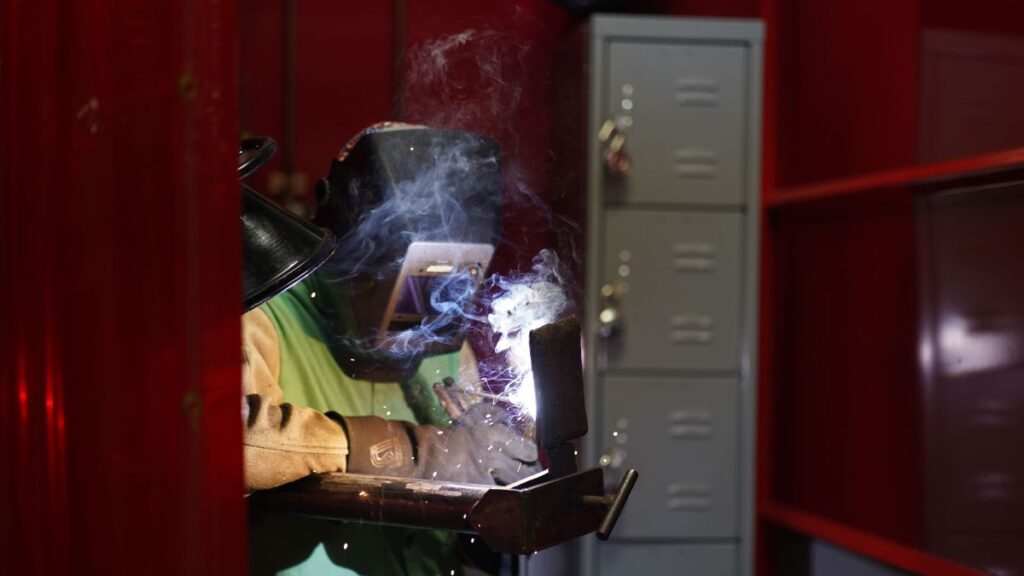
- Weld-Vision Series Welding Curtains engineered to improve fabrication safety and protect surrounding areas during welding processes
- Outdoor Curtains designed to shield workspaces from harsh weather conditions, including rain, snow, wind, and dust
- Privacy Series Industrial Curtain Walls that create enclosed, adaptable partitions for improved separation, protection, and workspace control
From temperature control curtains that help regulate internal environments to dust containment curtains that support cleaner operations, each system is designed to help you improve flow, safety, and adaptability.
If you are ready to upgrade your facility, Redcon offers industrial curtains that are built to scale with your operation—not slow it down.