
Environmental Curtain Systems & Industrial Curtain Walls
When Your Facility Needs Better Control Over Air, Dust, and Temperature
If you’re managing a warehouse, manufacturing floor, or fabrication shop, you’ve likely run into the same issues: uncontrolled airflow between zones, dust or airborne particles spreading through work areas, and temperature differences that make certain spaces harder to manage.
For facilities managers, operations directors, and shop foremen, these issues often show up as inconsistent working conditions, rising energy costs, and challenges in maintaining cleaner, more controlled environments across large or multi-use spaces.
Redcon’s environmental curtain systems are designed to solve those exact problems by creating flexible, high-performance barriers that improve air control, dust containment, and temperature stability, without locking you into permanent walls.
Flexible Industrial Curtains Built for Real Facilities
Environmental Series curtains are modular industrial curtain walls designed to divide large spaces into controlled environmental zones.
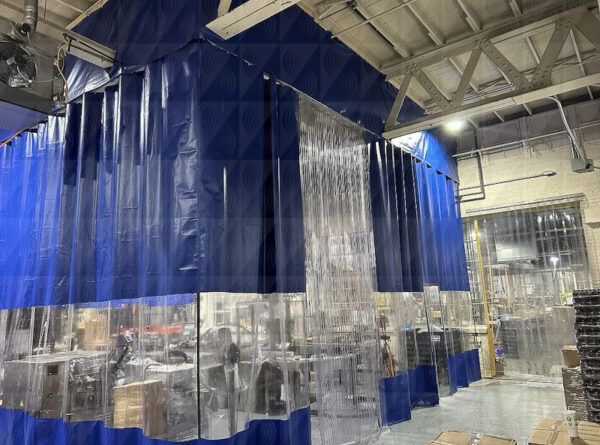
Built from heavy-duty vinyl with optional insulated layers, these temperature-control curtains help manage airflow, temperature differences, dust, and light while still allowing your facility to remain flexible and adaptable.
Installed on a heavy-duty roller track system, temperature-control curtains can be opened, closed, or reconfigured as your operation evolves, whether you’re adjusting to seasonal changes, process shifts, or expanding production.
What Are Environmental Curtain Systems?
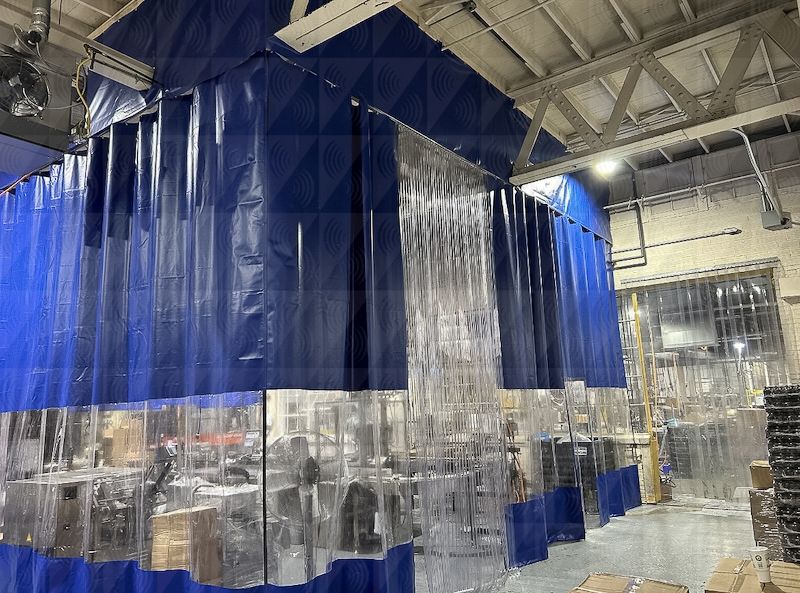
Environmental curtain systems are industrial partition systems designed to control air movement, contamination, and temperature variation across facility zones.
Each system includes:
- Heavy-duty vinyl panels for durability and containment
- Optional insulated curtain layers for thermal control
- Clear or opaque panel options for visibility or separation
- Steel track systems with reinforced roller hooks for smooth movement
- Secure fastening with heavy-duty Velcro closures
- Weighted hems for stability and seal performance
The result is a flexible system that functions like a sealed barrier when you need environmental control and opens up when you don’t.
Where These Systems Are Used Most
Environmental curtains are most often used in facilities that need better control over air quality, temperature, or contamination, especially where conditions change throughout the day or season.
Warehouses and Distribution Centers
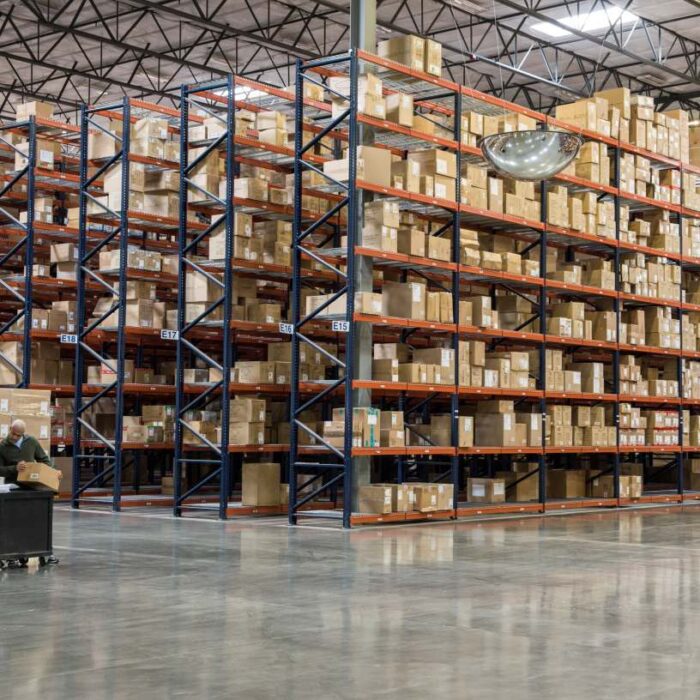
Insulated curtain walls are used to separate climate zones, protect stored goods, and reduce energy loss from large open spaces. They help reduce airflow between loading docks and storage areas.
Manufacturing Facilities
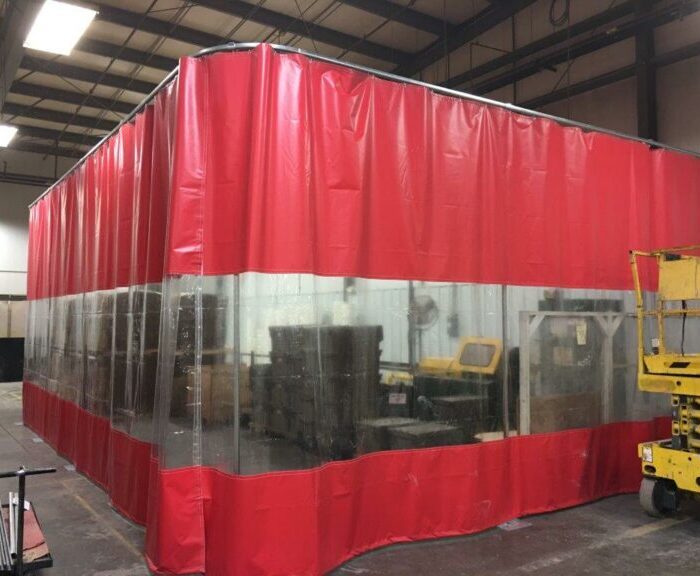
Environmental curtain systems help isolate heat-generating processes, dust-heavy operations, or temperature-sensitive production areas. Many teams use them to stabilize working conditions without permanent walls.
Automotive and Fabrication Shops
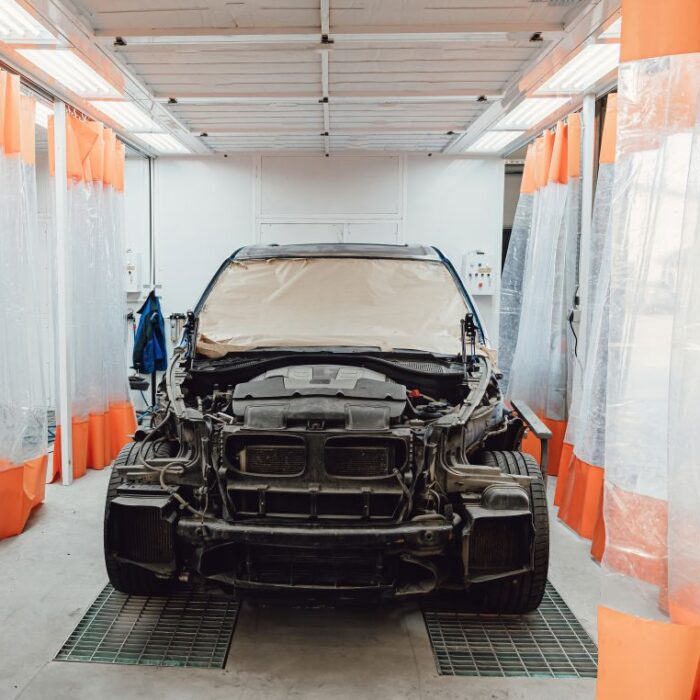
Dust contamination curtains control dust, overspray, sparks, and temperature shifts between active work zones.
Controlled or Clean Environments
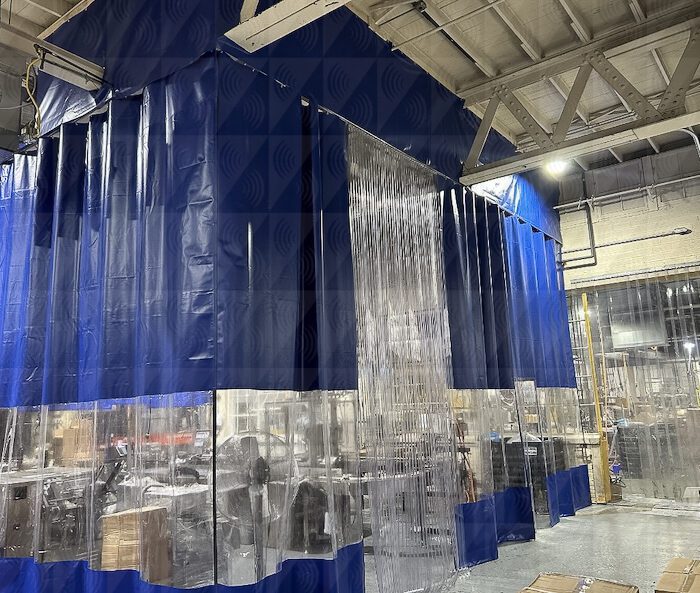
Environmental curtains are used to create temporary containment zones where cleanliness, airflow management, or environmental separation is required.
The Real Problem: Airflow, Temperature, and Contamination
Most industrial facilities weren’t designed for today’s environmental demands.
You end up with:
- Uncontrolled airflow between work zones
- Dust and airborne particles spreading across spaces
- Uneven temperatures across large facilities
- High energy loss from open or poorly sealed layouts
- No flexible alternative to permanent construction
For many operations leaders, the challenge isn’t recognizing the issue: it’s finding a solution that improves control without disrupting production.
How Environmental Curtain Systems Solve These Challenges
Environmental curtain systems are designed to give facilities control over their environment without sacrificing flexibility.
Improved Airflow and Temperature Control
These temperature control curtains help reduce air exchange between zones, stabilizing heating and cooling performance across your facility.
Dust and Contamination Containment
Heavy-duty dust contamination curtains help isolate processes that generate airborne particles, improving cleanliness and reducing cross-contamination.
Flexible Layouts That Adapt
Track-mounted industrial curtains allow you to adjust layouts as your facility changes without demolition or downtime.
Lower Energy and HVAC Strain
By controlling airflow between zones, insulated curtain walls help reduce energy loss and improve overall efficiency.
Cleaner, More Organized Workspaces
Defined environmental zones improve consistency and help teams maintain better control over sensitive processes.
System Features and Customization Options
Every environmental curtain system is designed around your facility. At Redcon, we don’t rely on standard kits: we build based on real operational needs.
Materials
- Heavy-duty vinyl available in multiple thickness options
- Optional insulated curtain wall construction
- Transparent or opaque panel configurations
Track Systems
- Smooth-glide roller systems for frequent movement
- Designed for industrial environments with heavy use
Mounting Options
- Compatible with standard, sloped, or irregular ceiling structures
Configurations
- Single-zone environmental barriers
- Multi-zone temperature control layouts
- Full facility industrial curtain wall systems
Add-On Options
- Strip doors for access control
- Reinforced insulation layers for insulated curtain walls
- Sealed bottom configurations for improved containment
How Redcon Approaches These Projects
Most companies focus on just selling industrial curtains.
At Redcon, we focus on how those systems actually perform inside your operation.
That means:
- Understanding how air, dust, and temperature move through your facility
- Identifying environmental inefficiencies and control gaps
- Designing environmental curtain systems that match real workflows
We work with manufacturing, warehousing, and industrial operations across the Northeast, helping teams improve environmental control without slowing down production.
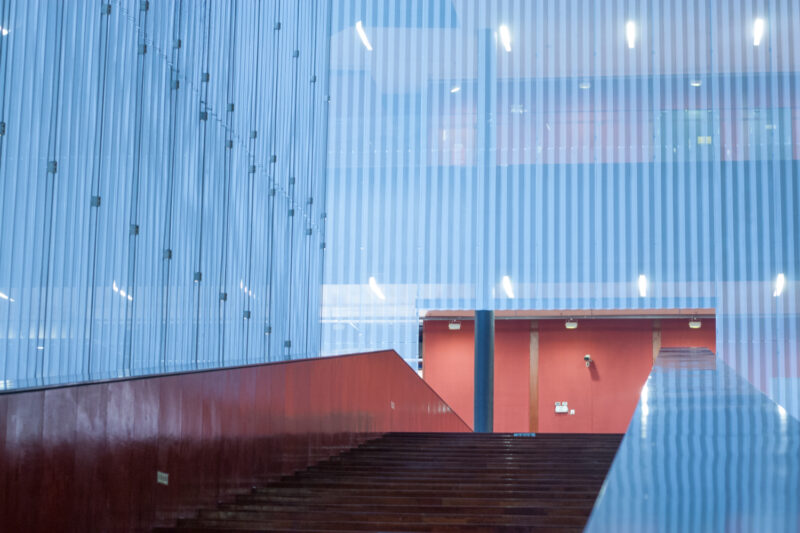
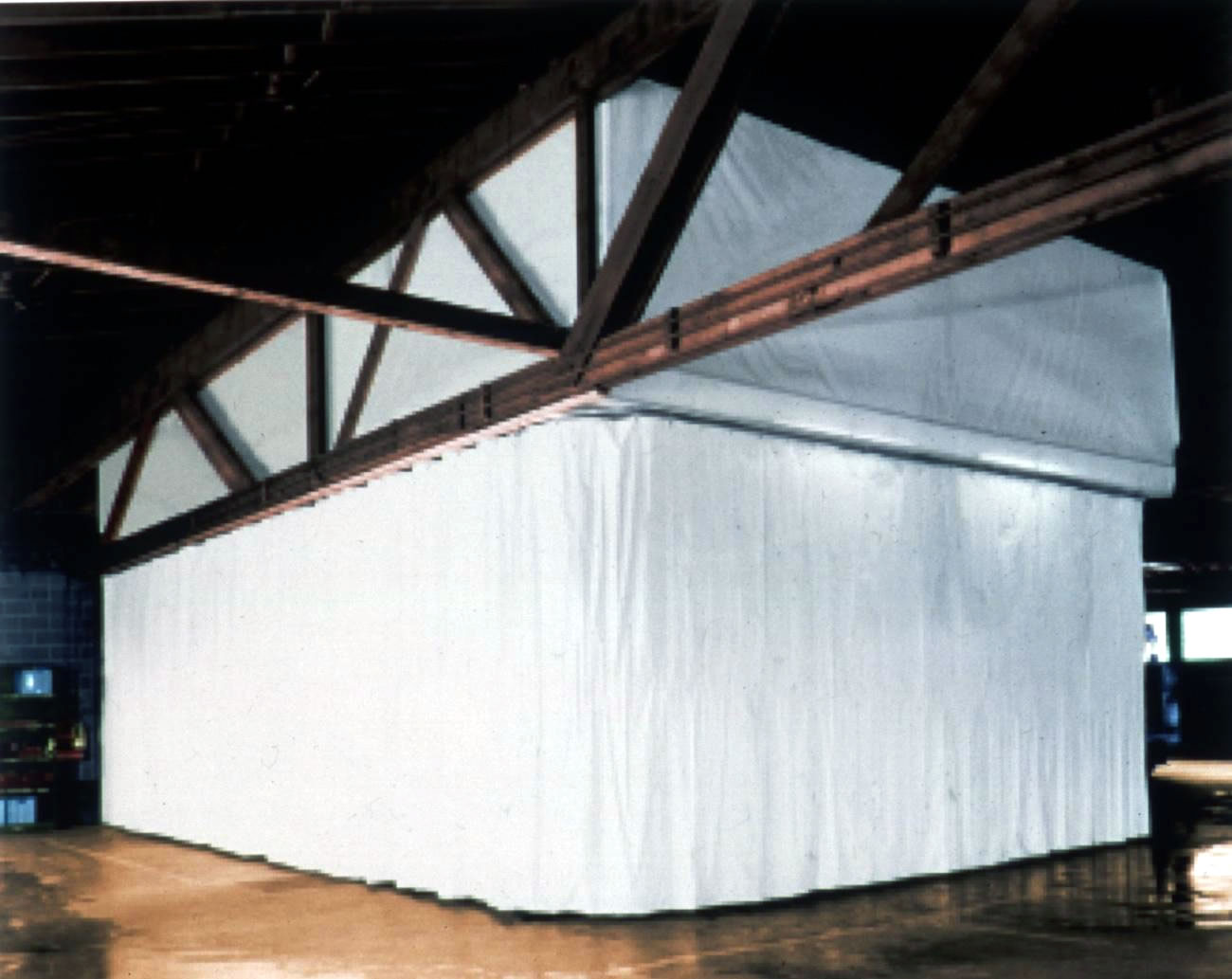
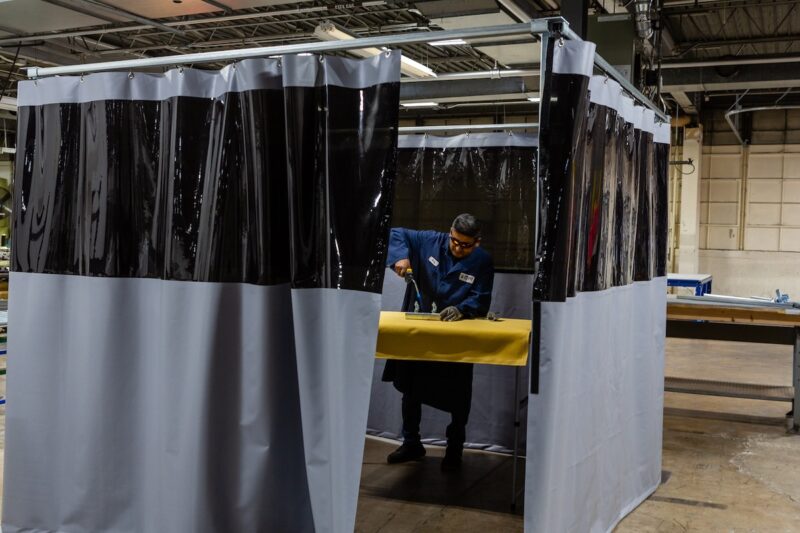
Common Applications Across Industrial Facilities
Warehouse Environmental Control Systems
Create separated climate zones that reduce energy loss and improve storage stability.
Manufacturing Environmental Curtains
Isolate heat, dust, or humidity-sensitive processes without permanent construction.
Industrial Workspace Dividers
Reduce airflow and contamination between work areas using flexible industrial curtains.
Facility Zoning Systems
Maintain environmental separation while keeping layouts adaptable.
Operational Impact: Efficiency, Cost, and Control
Facilities that implement environmental curtain systems often see:
- Better temperature consistency across zones
- Reduced HVAC and energy costs
- Lower dust and airborne contamination spread
- More stable working environments
- Faster installation compared to permanent walls
These aren’t abstract benefits. They show up in daily operations, comfort, and production consistency
Related Industrial Curtain Systems
Environmental curtains are one category within a broader range of industrial curtain systems designed for different facility needs.
Depending on your space, you may also need:
- Automotive curtain systems for service and fabrication areas
- Weld-Vision curtains for safety and compliance
- Privacy curtains for enclosed work zones
- Outdoor curtains for weather protection
- Super-Vision curtain systems for visibility and zoning
Explore all industrial curtain systems or request a quote to find the right solution for your facility.
FAQs
What are environmental curtain systems made of?
They are made of heavy-duty vinyl panels, with optional insulated layers and track-mounted hardware for flexible installation.
Do environmental curtains help with temperature control?
Yes. These temperature control curtains reduce airflow between zones and improve overall energy efficiency.
Can these systems reduce dust and contamination?
Yes. Dust contamination curtains help isolate processes and limit airborne particle movement.
How long do environmental curtain systems last?
Most systems last five to 10 years, depending on usage, environment, and maintenance.
Can they be customized?
Yes. Every system is designed as a custom industrial curtain wall solution based on your facility layout.
How long does installation take?
Installation can take a few hours for small zones or a couple of days for larger systems, which is much faster than permanent construction.
Design a More Controlled, Efficient Facility
If your facility is dealing with airflow issues, temperature swings, or contamination concerns, environmental curtain systems can solve multiple challenges at once.
Work with Redcon to design industrial curtain systems that improve control, efficiency, and flexibility across your operation.