
Why HVAC Costs Are Rising and How Industrial Curtains Can Help
Heating and cooling a warehouse or industrial facility has never been simple. Large open spaces, high ceilings, loading doors, equipment, and changing outdoor temperatures can all make climate control difficult.
When energy costs rise, those challenges become even more expensive.
Your HVAC system may be heating or cooling thousands of square feet even though only part of the building needs tight temperature control. Conditioned air can escape through loading areas and other openings. Temperature differences between work zones can also force HVAC equipment to work harder to maintain comfortable conditions.
Before assuming your facility needs a larger HVAC system or major building upgrades, it may be worth looking at the space itself.
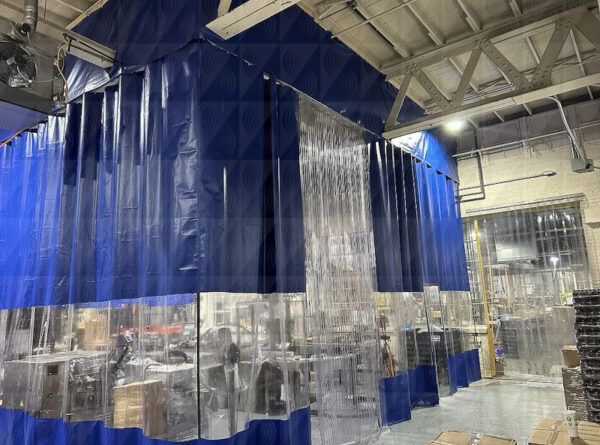
Industrial curtains and temperature control curtains can help divide large facilities into smaller zones. By creating physical separation between areas with different temperature needs, your business may be able to use conditioned air more strategically.
At Redcon Industrial Supplies, we provide customizable industrial curtain systems for warehouses, manufacturing facilities, cold storage operations, and other industrial environments. In this post, we’ll look at some of the factors behind rising HVAC costs and how better temperature zoning can support a more energy-efficient facility.
Why Industrial HVAC Costs Can Be Difficult to Control
Heating and cooling represent a significant portion of building energy use, making HVAC efficiency an important consideration for facility managers.
There isn’t one reason a warehouse’s heating and cooling costs increase. Energy prices are part of the equation, but the way a facility operates also matters. Large industrial buildings present challenges that aren’t as common in smaller commercial spaces.
High ceilings increase the volume of air that needs to be conditioned. Large doors may open throughout the day as employees, equipment, and materials move in and out. Some areas generate heat from machinery, while others may require cooling or refrigeration.
The building may also have changed since its HVAC system was installed. New production lines, different storage requirements, or changes in how space is used can affect heating and cooling needs. That means HVAC cost reduction isn’t always just an HVAC issue. Facility layout and temperature control can also play a role.
Heating and Cooling Unused Space Wastes Energy
Not every part of your facility needs to be maintained at the same temperature. Employees may work primarily in one section of a warehouse, while certain products may require specific storage conditions. A production process may generate heat while a nearby area needs to remain cooler. Yet an open layout allows air to move between all of these spaces.
If your HVAC system is trying to maintain one temperature across the entire building, you may be using energy to condition areas that don’t require it. Creating smaller climate zones can help your business focus heating and cooling where they’re actually needed.
Temperature Zoning Can Make Large Spaces More Manageable
Traditional walls can create separate rooms, but permanent construction isn’t always practical in an active industrial facility. Environmental curtain systems can offer a more flexible way to divide space and create separate temperature zones.
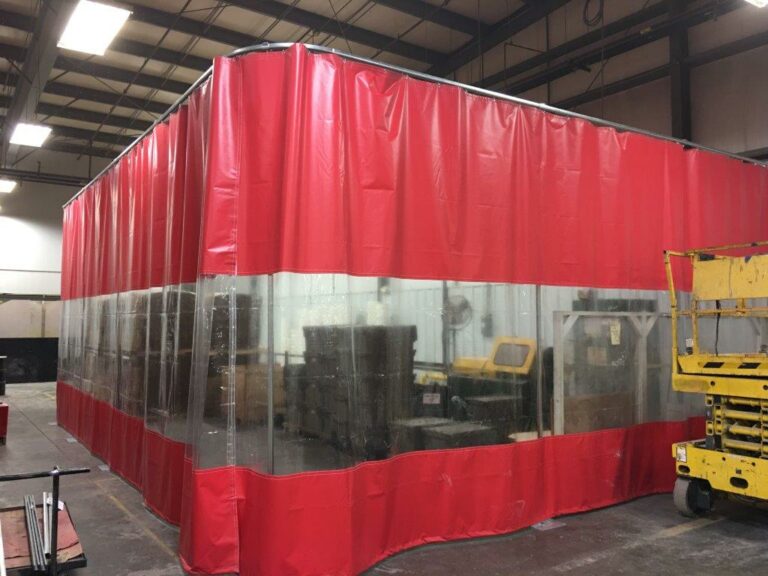
Curtains can create physical boundaries between areas with different climate requirements. For example, you might separate an employee work area from warehouse storage or isolate a production zone that generates additional heat.
This approach doesn’t change the efficiency of the HVAC equipment itself. Instead, it can help address the environment that equipment is trying to control.
By reducing unnecessary air exchange between zones, your facility may be able to maintain desired temperatures more effectively.
Industrial Curtains Can Support HVAC Cost Reduction
An HVAC system has to respond to the conditions around it.
If conditioned air continuously moves into areas where it isn’t needed, the system may need to run longer to maintain the desired temperature in occupied or temperature-sensitive spaces.
Industrial curtains can help create boundaries that limit that exchange. Depending on your facility and application, curtains may help:
- Separate heated and unheated areas
- Divide air-conditioned work zones from general warehouse space
- Reduce air movement between areas with different temperature requirements
- Create smaller zones within large, open facilities
- Separate loading or staging areas from conditioned spaces
- Support temperature-sensitive production or storage
The goal isn’t simply to block airflow. It’s to give your business greater control over where conditioned air goes. That can make industrial curtains one component of a broader HVAC cost reduction strategy.
Look Beyond Traditional Warehouse Insulation Solutions
When businesses think about controlling indoor temperature, insulation is often one of the first solutions that comes to mind. And insulation is important. Walls, roofs, doors, and other parts of the building envelope can affect energy use by allowing unwanted air leakage between indoor and outdoor environments.
But traditional warehouse insulation solutions don’t necessarily address temperature differences inside the building. An insulated warehouse can still contain areas with very different needs.
For example, employees working at a packing station may need heating during winter while nearby inventory does not. A production process might generate enough heat to make an adjacent workspace uncomfortable.
Internal separation can help address those differences. Rather than treating the entire warehouse as one climate zone, curtains and partitions allow your facility to create smaller environments within the insulated building.
Improve Warehouse Energy Efficiency Through Smarter Zoning
Improving energy efficiency in warehouses and distribution centers doesn’t always require one major project. Sometimes, the better approach is to look for places where energy is being used unnecessarily.
Walk through your facility and consider:
- Which areas are actively heated or cooled?
- Which areas actually need that conditioning?
- Where does conditioned air escape?
- Are doors between different temperature zones frequently left open?
- Do employees use portable heaters or fans to compensate for uncomfortable areas?
- Are certain areas difficult to keep at the desired temperature?
These questions can reveal problems that may not be obvious from an energy bill alone.
A warehouse may have efficient HVAC equipment but still waste energy because its physical layout makes temperature control difficult. Improving the way spaces are separated can help the equipment you already have operate within a more manageable environment.
Climate Control Curtains Help Facilities Adapt
Temperature needs aren’t always permanent. Seasonal changes can affect where heating or cooling is needed. Production requirements may change throughout the year. Equipment may move. A storage area may eventually become an active workspace.
That’s where climate control curtains offer an advantage over fixed construction.
Depending on the system, curtains can provide separation while allowing the facility to retain greater flexibility. This makes it easier to rethink temperature zones as operations evolve.
For growing businesses, that adaptability can be particularly useful. Instead of designing the entire facility around today’s climate-control needs, you can create zones that support current operations while leaving room for future changes.
Cold Storage Requires Even Greater Temperature Control
For cold storage facilities, controlling air movement can be especially important. Every time warmer air enters a refrigerated or chilled area, cooling equipment must compensate for the temperature change.
Cold storage curtains can help provide additional separation at openings or between spaces with different temperature requirements. Depending on the application, they may be used around coolers, freezers, loading areas, or temperature-sensitive storage zones.
The right system depends on factors such as temperature range, traffic, access requirements, and how frequently employees or equipment move through the area.
Cold storage applications may also require specialized curtain materials designed for low-temperature environments.
Don’t Overlook Loading and Staging Areas
Loading docks are essential to warehouse operations, but they can also make climate control challenging. Doors may open repeatedly as trucks arrive and products move through the facility. That can introduce hot or cold outdoor air into nearby conditioned spaces.
Staging areas can present similar challenges, particularly when they sit between loading docks and temperature-controlled parts of the warehouse. Strategically placed industrial curtains can create another layer of separation between these areas.
Rather than allowing outside air to enter a conditioned workspace directly, your facility can create transitional zones that help limit unnecessary air exchange.
Combine Industrial Curtains With Other Energy-Efficiency Improvements
Industrial curtains aren’t a replacement for an efficient HVAC system, proper building insulation, or routine equipment maintenance. They work best as part of a larger strategy.
Depending on your facility, that strategy may include HVAC maintenance, building-envelope improvements, weather sealing, efficient lighting, temperature setbacks, equipment upgrades, and better control systems.
Facility layout should be part of that conversation, too.
If the physical space makes temperature control unnecessarily difficult, even efficient equipment may have to work harder than it otherwise would. For a broader look at managing environmental conditions throughout your facility, check out our post on how industrial curtains can help control dust, noise, and temperature.
The goal should be to create an environment in which your HVAC system, building envelope, and facility layout work together.
Take a More Strategic Approach to Industrial Climate Control
Rising HVAC costs can put pressure on any industrial operation, but replacing equipment or renovating a building isn’t always the first place to start.
Look at where your energy is going. If you’re heating or cooling large areas that don’t need the same level of climate control, dividing the facility into smaller zones may help you use conditioned air more strategically.
Industrial curtains and temperature-control curtains can provide flexible separation in warehouses, manufacturing plants, cold storage facilities, and other industrial environments.
At Redcon Industrial Supplies, we provide customizable curtain systems tailored to your facility’s needs. Whether you want to create separate temperature zones, improve cold storage separation, or gain better control over a large open space, we can help you explore the right solution.
Request a quote online to find the right temperature-control curtain system for your facility.
Frequently Asked Questions (FAQs)
How can industrial curtains help reduce HVAC costs?
Industrial curtains can divide large open facilities into smaller temperature zones and help limit air exchange between areas. This may allow a business to concentrate heating or cooling where it is actually needed rather than conditioning an entire open space to the same temperature.
What are temperature control curtains?
Temperature control curtains are industrial curtain systems used to separate areas with different climate requirements. They may be used to divide heated and unheated spaces, air-conditioned work areas, cold storage zones, or other temperature-sensitive environments.
Are industrial curtains a replacement for insulation?
No. Industrial curtains and building insulation serve different purposes. Insulation helps reduce heat transfer through the building envelope, while curtains can provide separation between different areas inside a facility. The two can be used together as part of a broader energy-efficiency strategy.
Where can climate control curtains be used?
Climate control curtains can be used in warehouses, manufacturing plants, loading and staging areas, employee work zones, cold storage operations, and other industrial spaces where different areas have different temperature requirements.
What should I consider when choosing cold storage curtains?
Consider the required temperature range, size of the opening, employee and equipment traffic, frequency of access, and environmental conditions. Curtain materials and configurations should be selected for the specific cold storage application.