Facility Safety Audit: What To Look for Before Problems Happen
Most workplace safety problems do not appear out of nowhere. They usually build over time. A walkway becomes more crowded. Storage starts creeping into active work areas. A temporary fix becomes permanent. New equipment changes traffic patterns. Employees begin working around hazards that were not part of the original facility layout.
That is why a facility safety audit matters.
A thorough review can help you identify risks before they lead to injuries, downtime, equipment damage, or compliance issues. It also gives your business a clearer picture of how well your current industrial safety systems support the way your facility actually operates.
At Redcon Industrial Supplies, we believe workplace safety starts with understanding the environment as a whole. In this post, we’ll look at what to include in a facility safety audit, how to use a warehouse safety checklist effectively, and how physical safety systems can support a broader risk management strategy.
A Safety Audit Should Look Beyond Obvious Hazards
Some hazards are easy to spot, such as an obstructed walkway, damaged guardrail, or missing barrier. Others are less obvious.
A process may be technically functioning but still create unnecessary exposure for employees. Equipment may be positioned in a way that forces workers into busy traffic areas. Storage may block visibility. Noise, dust, heat, or welding activity may affect areas outside the intended work zone.
A good safety compliance audit should look at how people, equipment, materials, and processes interact. The goal is not simply to find what is broken, but to identify where the way your facility operates may be creating unnecessary risk.
Start Your Facility Safety Audit With Traffic Flow
One of the best places to begin a facility inspection checklist is with traffic flow.
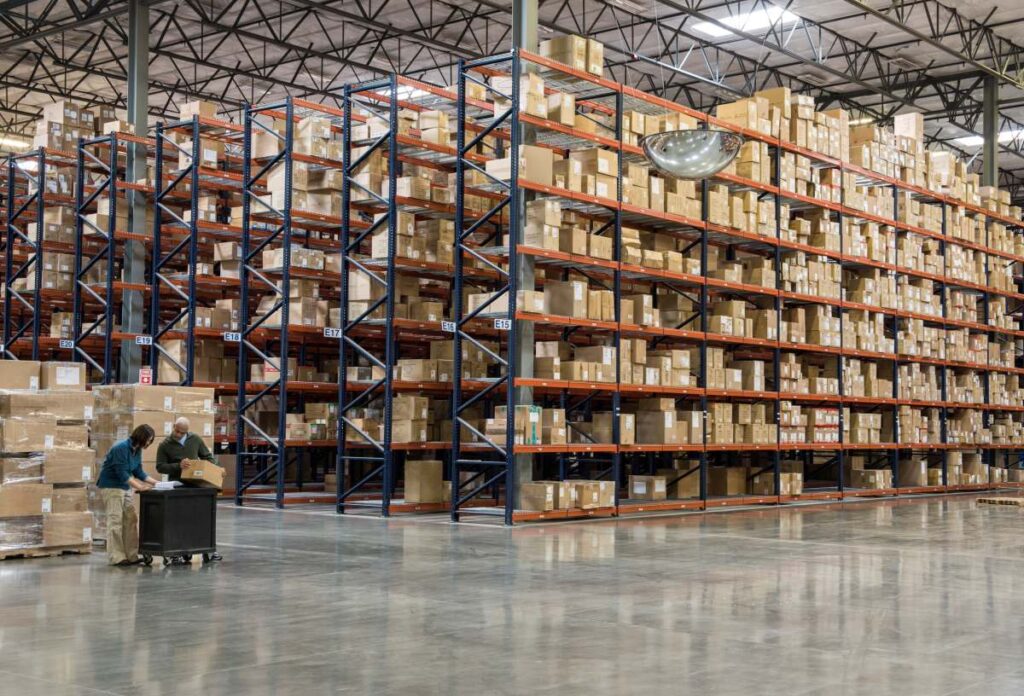
Watch how employees move through the building during a normal shift. Look at pedestrian routes, forklift paths, loading areas, staging zones, maintenance access, and equipment locations.
Pay attention to places where:
- Pedestrians and equipment cross paths
- Employees take shortcuts through active work zones
- Materials block visibility
- Storage extends into travel lanes
- Equipment creates blind spots
- Temporary work areas interfere with normal traffic
These issues may seem minor, but repeated interaction between people and equipment can increase risk. Facility safety is not only about individual machines. It is also about the space around them.
Review How Work Zones and Physical Barriers Protect Employees
Next, look at how clearly different activities are separated.
Production, welding, maintenance, storage, packaging, shipping, and employee work areas may all exist within the same building. When those boundaries are unclear, employees can be exposed to hazards from nearby operations.
For example, welding light and sparks can extend beyond the immediate work area. Dust-producing processes may affect adjacent spaces. Loud equipment can interfere with nearby work. Temperature differences may also make certain areas uncomfortable or harder to control.
This is where industrial safety systems such as barriers, partitions, and industrial curtains can support safer facility design.
Use an OSHA Checklist as a Starting Point, Not the Entire Audit
An OSHA checklist can be useful because it gives your team a structured way to review common workplace hazards. But a checklist should not replace observation.
Every facility operates differently, and two warehouses with similar equipment may pose very different risks due to layout, staffing, production volume, traffic patterns, or how employees use the space.
That means a strong audit combines compliance requirements with real-world facility conditions.
When reviewing your workplace, consider areas such as:
- Walking and working surfaces
- Machine guarding
- Personal protective equipment
- Emergency exits
- Hazard communication
- Electrical safety
- Material handling
- Welding and hot work
- Housekeeping
- Employee training
Then compare those requirements with what is happening on the floor. The gap between the written procedure and actual behavior is often where risk develops.
Identify Temporary Facility Changes That May Create Safety Risks
Many facility problems begin with a short-term solution. A pallet is stored in an unused corner. A workstation is moved to make room for equipment. A maintenance area is created temporarily. Employees begin using an alternate route because the original path is blocked.
Over time, however, that temporary arrangement may become permanent without anyone stopping to reevaluate whether it is still safe or appropriate.
During a facility safety audit, pay close attention to these informal changes and ask whether they still make sense. If a temporary work area is now permanent, it may need better separation, signage, barriers, or access control. If storage has expanded, traffic routes may need to be reviewed.
Small operational changes can eventually create large safety gaps.

Check Whether Safety Systems Still Match Current Operations
Facilities evolve, and safety systems need to evolve with them. A barrier installed several years ago may no longer protect the right area. A production line may have expanded. Equipment may have moved. Traffic patterns may have changed.
That is why industrial safety systems should be reviewed as part of the audit rather than treated as permanent fixtures.
Look at:
- Barrier placement
- Curtain and partition locations
- Access points
- Guardrails
- Signage
- Floor markings
- Visibility
- Employee travel paths
Ask whether each system still supports the way the space is used today. A safety measure can be in good condition and still be in the wrong place.
Include Environmental Conditions in Your Facility Safety Audit
Workplace safety is not limited to physical contact hazards. The surrounding environment matters, too. Noise, dust, temperature, airflow, fumes, and visibility can all affect how safely employees work.
During the audit, look for areas where one process affects another. For example, dust may spread from fabrication into assembly. Welding light may reach nearby workstations. Heat from equipment may make an adjacent area uncomfortable. Noise may make communication more difficult.
Physical separation may help control some of these conditions. Environmental curtain systems can create defined work zones while preserving more flexibility than permanent construction.
This is one reason facility safety and facility layout should be reviewed together.
Use a Warehouse Safety Checklist To Create Consistency
A warehouse safety checklist can help make inspections more consistent. Without a checklist, different supervisors may focus on different issues. One person may notice housekeeping problems while another pays more attention to equipment.
A documented safety inspection checklist creates a repeatable process. It can also help you track recurring issues over time. If the same problem appears during several inspections, that may signal a deeper facility or workflow issue rather than a one-time mistake.
A useful warehouse safety checklist might include:
- Pedestrian and forklift routes
- Exit access
- Storage practices
- Housekeeping
- Equipment guarding
- Work zone separation
- PPE use
- Lighting
- Signage
- Emergency equipment
- Environmental conditions
- Temporary work areas
The checklist should reflect your specific operation rather than serving as a generic form that never changes.
Turn Facility Safety Audit Findings Into Actionable Priorities
Finding hazards is only the first step. The next step is determining what to do about them. Not every issue carries the same level of risk. Some problems may require immediate action. Others may be monitored or included in future facility upgrades.
A useful risk management approach is to prioritize findings based on factors such as:
- Likelihood of an incident
- Potential severity
- Number of employees exposed
- Frequency of exposure
- Whether existing controls are effective
- How quickly the issue can be corrected
This helps prevent a safety audit from becoming a long list of observations with no clear next step and turns the findings into a practical plan for improvement.
Look at Safety and Security as Connected Risks
Workplace safety and facility security serve different purposes, but the risks can sometimes overlap. A poorly controlled access point may create a security concern while also allowing unauthorized people into active work areas. High-value storage areas may require both physical separation and access control. Loading zones may involve traffic safety, inventory protection, and perimeter security at the same time.
That does not mean safety and security should be treated as one system everywhere. Instead, they can be viewed as different parts of a broader approach to protecting your people, assets, and operations.
Redcon Industrial Supplies focuses on physical environments and facility safety systems, while sister company Redcon Security supports people and asset protection through security services and technology.
For some facilities, looking at both areas can provide a more complete picture of operational risk.
A Facility Safety Audit Should Lead to Better Decisions
A safety audit is not just a compliance exercise. It is a chance to understand how your facility is really functioning. It can reveal where layouts no longer support current operations, where employees and equipment interact unnecessarily, where work zones need better separation, and where existing safety systems may need to change.
That makes the audit useful not only for compliance but also for broader facility planning.
When you understand where the risks are, you can make more targeted decisions about barriers, partitions, curtains, signage, traffic flow, training, or other controls.
Build a Safer Facility With the Right Systems
A safer workplace starts with seeing the facility as a connected environment. People, equipment, materials, processes, and physical space all affect one another.
A strong facility safety audit can help your business identify hazards, prioritize risks, and determine where industrial safety systems may support safer operations.
At Redcon Industrial Supplies, we provide customizable industrial curtain and partition systems for warehouses, manufacturing facilities, and other industrial environments. Our goal is to help you create safer, more clearly defined work areas that support the way your facility actually operates.
Request a quote online to explore safety solutions for your facility.

Frequently Asked Questions (FAQs)
What is a facility safety audit?
A facility safety audit is a structured review of workplace conditions, processes, equipment, and safety controls. The goal is to identify hazards, evaluate current protections, and prioritize improvements before problems lead to incidents or compliance issues.
What should be included in a warehouse safety checklist?
A warehouse safety checklist may include pedestrian and forklift routes, storage practices, housekeeping, exits, equipment guarding, PPE, signage, emergency equipment, work zone separation, lighting, and environmental conditions.
Is a facility safety audit the same as an OSHA inspection?
No. A facility safety audit is an internal review used to identify and address workplace risks. An OSHA inspection may evaluate compliance with applicable safety regulations.
How often should a facility safety audit be performed?
The right frequency depends on the facility, industry, operations, and level of risk. Audits may also be useful after major equipment changes, layout changes, incidents, or significant changes in production.
How can industrial safety systems support workplace safety?
Industrial safety systems such as barriers, partitions, curtains, guardrails, and other controls can help define work zones, separate certain processes, manage environmental conditions, and reduce unnecessary interaction between employees and hazards.