How To Design a Safer Manufacturing Environment Without Major Construction
Improving safety in a manufacturing facility doesn’t always mean starting a major renovation. In many cases, strategic changes to the way your facility is organized can help create safer, more clearly defined work areas.
Manufacturing facilities are constantly changing. Work zones shift, new equipment arrives, production lines expand, and employees move between different areas throughout the day. A layout that worked several years ago may no longer provide the separation employees need today.
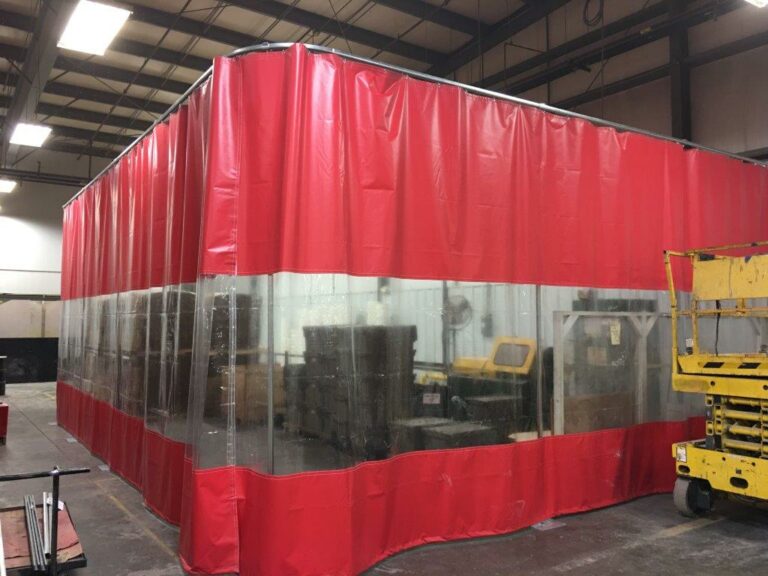
That’s where industrial safety systems can help. Safety partitions, barriers, and other modular solutions allow your business to address specific hazards and create clearer boundaries within an existing facility.
At Redcon Industrial Supplies, we provide industrial curtain and partition systems designed for manufacturing and other demanding work environments. In this post, we’ll look at practical ways to improve facility safety, separate work zones, and adapt your space without taking on a major construction project.
Identify Safety Hazards in Your Manufacturing Facility
Before adding barriers or changing your layout, look at how employees, equipment, materials, and vehicles move through your facility.
A manufacturing floor can include several activities happening close together. Employees may walk near equipment. Forklifts may travel between storage and production areas. Welding, grinding, or other processes may take place near unrelated workstations.
Identifying these interactions can help you determine where better separation may be useful.
Look for areas where:
- Employees regularly work near moving equipment or machinery
- Pedestrian paths cross material-handling routes
- Welding, grinding, or other processes affect surrounding work areas
- Maintenance activities take place near active production
- Different processes operate too close to one another
- Temporary work zones need clearer boundaries
The goal is to understand how your facility actually operates. Once you identify areas of concern, you can choose manufacturing safety solutions that address those specific needs.
Create Safer, More Defined Work Zones
One of the simplest ways to improve a manufacturing environment is to make different work zones easier to recognize.
When production, maintenance, storage, and other activities share one large space, boundaries may not always be obvious. Employees need to know when they are entering an area with different hazards or operating requirements.
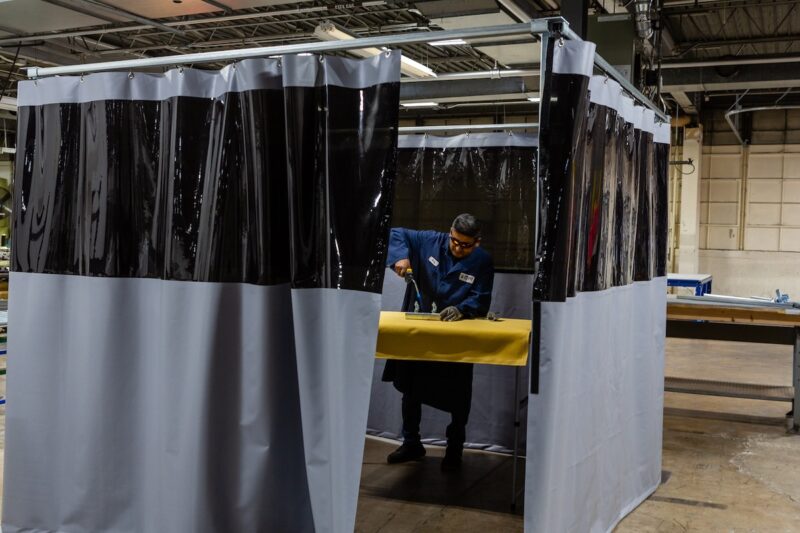
Safety partitions and industrial barriers can create physical separation between activities while helping employees understand how different areas of the facility are intended to be used.
For example, your business might establish dedicated zones for:
- Production and assembly
- Equipment maintenance
- Welding and fabrication
- Material storage
- Quality inspection
- Employee workstations
- Temporary projects or processes
Clearer zoning can also make it easier to adjust your safety strategy as operations change.
Separate Hazardous Processes From Employees and Work Areas
Some manufacturing processes create risks that extend beyond the equipment itself.
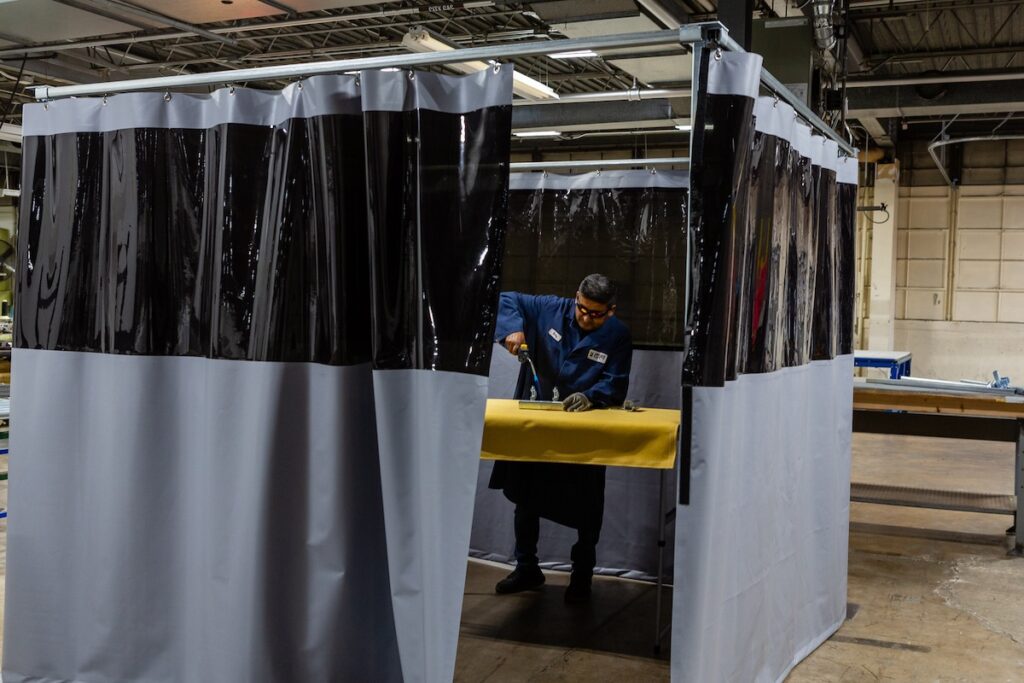
Welding is a good example. Sparks, spatter, and intense light can affect employees who aren’t directly involved in the welding process. Creating an appropriate barrier around the work area can help separate the process from nearby employees and activities.
Our welding curtain systems are designed to create defined welding areas within industrial facilities. Depending on your setup, these systems can help shield surrounding workspaces while allowing your business to establish dedicated welding zones.
Other manufacturing activities may benefit from separation as well. Grinding, equipment repair, fabrication, and similar processes can often be easier to manage when they have clearly defined boundaries.
Rather than treating your entire manufacturing floor as one environment, consider the risks associated with each activity and whether additional separation would support safer operations.
Improve Safety Around Pedestrian and Equipment Traffic
Facility safety isn’t only about individual machines. The way people move around those machines matters, too.
Employees may walk between workstations, storage areas, break areas, loading zones, and other parts of the facility throughout a shift. At the same time, forklifts, carts, and other material-handling equipment may travel through many of those same spaces.
When these routes overlap, facility design becomes especially important.
Your business can review traffic patterns and look for opportunities to create more defined pedestrian and equipment zones. Industrial barriers and partitions may be one part of that strategy, along with floor markings, signage, guardrails, and other safety measures appropriate for your facility.
This is also where thoughtful layout planning matters. A barrier should help clarify movement through the space, not create a new obstruction or visibility problem.
Use Modular Partitions for a More Flexible Facility
Manufacturing environments rarely stay exactly the same.
You may add a new production line, relocate equipment, change how materials are stored, or dedicate an area to a temporary project. Safety systems need to keep up with those changes.
Modular partitions give your business more flexibility when work areas need to be reconfigured. Depending on the system, partitions can create defined spaces without requiring you to redesign the entire facility around them.
This can be especially useful for businesses that:
- Frequently reorganize production areas
- Add or relocate equipment
- Experience seasonal changes in production
- Need temporary work or maintenance zones
- Expect their operations to expand
Instead of thinking about safety improvements as one large project, your business can address individual areas as needs develop.
Prioritize Facility Upgrades Based on Safety Risks
A safer manufacturing environment can be built through a series of focused improvements.
For example, one area may need better separation around welding operations. Another may need a clearer boundary between production and storage. Somewhere else, employees may need a more defined route around active equipment.
Addressing these areas individually can make facility upgrades more manageable. It also allows you to prioritize changes based on risk. Areas with the greatest potential hazards can be addressed first, followed by lower-priority improvements over time.
This approach can be particularly valuable when your business wants to improve an existing facility without interrupting production for an extensive renovation.
How Industrial Barriers Can Support OSHA Safety Improvements
Physical barriers can play a role in workplace safety, but they should be part of a broader safety program.
OSHA requires employers to provide a workplace free from recognized hazards that are causing or are likely to cause death or serious physical harm. The exact safety measures your facility needs will depend on its operations, equipment, processes, and hazards.
When planning OSHA safety improvements, consider how physical separation fits alongside other controls, including:
- Equipment guarding
- Personal protective equipment
- Signage and floor markings
- Ventilation
- Employee training
- Safe operating procedures
- Hazard communication
Industrial barriers and partitions shouldn’t replace required machine guards or other safety controls. Instead, they can help support a larger strategy for organizing work areas and limiting exposure to certain operations.
How To Choose the Right Industrial Barrier for Your Facility
Not every barrier serves the same purpose.
A welding curtain, for example, is designed for a different application than a general partition. Likewise, a system used to create a temporary maintenance area may have different requirements than one surrounding an active manufacturing process. Other industrial curtain systems can help address environmental concerns such as dust, noise, and temperature.
Before choosing a system, consider:
- The hazard: What are you trying to separate or control?
- The location: Where will the barrier be installed, and what activities take place nearby?
- Access: Will employees or equipment need to move through the area regularly?
- Visibility: Do employees need to see through or around the partition?
- Frequency of change: Is this a permanent work zone, or does your layout change often?
- Facility conditions: What temperatures, equipment, materials, and processes will be present?
Starting with the application makes it easier to choose a safety partition or barrier that fits the way your facility operates.
Create a Safer, More Adaptable Manufacturing Facility
A safer manufacturing environment doesn’t have to begin with a construction crew. It can begin by looking closely at your current operation and identifying where employees, equipment, and processes need better separation.
Industrial safety systems can help you create defined work zones, isolate certain processes, and make targeted improvements as your facility evolves. More importantly, they allow safety decisions to become part of your day-to-day facility planning rather than something addressed only during a major renovation.
At Redcon Industrial Supplies, we provide customizable industrial curtain and partition systems for manufacturing and other industrial environments. Whether you need to create a welding area, separate work zones, or address another facility challenge, we can help you find a system suited to your application. Request a quote online to get started.
Frequently Asked Questions (FAQs)
What are industrial safety systems?
Industrial safety systems include products and practices designed to help reduce workplace hazards and create safer work areas. Depending on the facility, these may include safety partitions, industrial barriers, machine guarding, signage, PPE, ventilation systems, and other controls.
How can safety partitions be used in manufacturing?
Safety partitions can create defined areas for different manufacturing activities. They may be used to separate welding or fabrication areas, establish maintenance zones, divide production activities, or provide clearer boundaries between different parts of a facility.
What are modular partitions?
Modular partitions are systems designed to create separate areas within an existing facility while allowing greater flexibility than fixed construction. They can be useful in manufacturing environments where production layouts or space requirements change over time.
Can industrial barriers help with OSHA compliance?
Industrial barriers may support a broader workplace safety program, but installing a barrier does not automatically make a facility OSHA compliant. Employers should evaluate their specific hazards and follow all applicable OSHA requirements.
How do I choose the right safety partition?
Start with the hazard or activity you need to address. Consider the location, required access, visibility, facility conditions, and whether the area may need to change in the future. From there, you can select a partition designed for that particular application.